


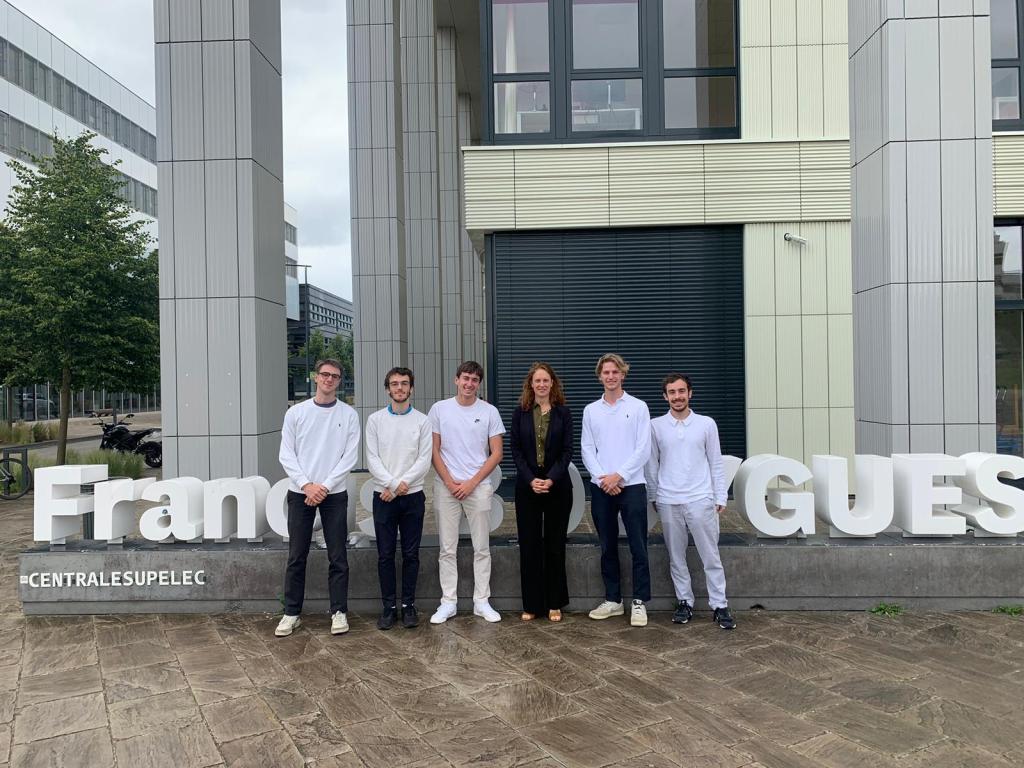
Team Armand Burlet-Pailhé, Mattéo Cineux, Henri-Louis Pozzo di Borgo, Raphaël Rigaud, and Flavio Silvestre conducted this comprehensive study as part of their academic training under the guidance of Gwenaëlle Guillerme, Secretary General of the T.I.M.E. association, and academic advisor Caroline Leplatois.

Detailed report:
Objectives and approach The T.I.M.E. Project aimed to achieve three key objectives:
- Environmental factors on mobility decisions: Understand the impact of environmental factors on student mobility decisions in the engineering education sector;
- Carbon footprint assessment: Measure the carbon impact of international mobility within the T.I.M.E. network to support data-driven discussions and help students make informed choices.
- Study on the purpose of international mobility: Understand the benefits and motivations for students, teachers, and administrators, including personal and professional growth and environmental considerations.
- State of environmental measures: Evaluate and share the environmental policies and practices across T.I.M.E. network institutions to inspire further improvements.
To meet these objectives, the team implemented detailed questionnaires targeting students, faculty, and administrators. They also conducted individual interviews to gather qualitative insights on the experiences and perspectives related to international mobility.
Key findings carbon footprint: Air travel emerged as the most significant contributor to the carbon footprint of international mobility. For instance, a round trip from Paris to Vancouver by plane emits approximately 2500 kg of CO2, compared to just 72 kg of CO2 for a similar distance by train. Encouraging the use of trains for short to medium distances can drastically reduce emissions.
Purpose of mobility: Students view international mobility as highly beneficial both personally and professionally. Approximately 95% of students believe it enriches their personal development, particularly in terms of cultural exposure and language learning. Professionally, 64% of students recognise the benefits of adaptability and gaining international experience. However, there is a growing awareness of the environmental impact of mobility, with nearly half of the students considering ecological factors when making travel decisions.
University measures: Current measures taken by universities include:
- Conducting carbon footprint analyses to understand and address the environmental impact.
- Implementing awareness campaigns about sustainable travel and the benefits of long-term mobility over short-term exchanges.
- Offering financial incentives, such as the Erasmus+ green mobility grant, to encourage the use of eco-friendly transport options.
Proposed actions: To further reduce the carbon impact of international mobility, the project recommends:
- Promoting the use of trains and buses over planes for shorter distances.
- Providing additional financial support to cover the cost difference between sustainable and conventional travel options.
- Implementing mandatory train travel for journeys under a specific duration (e.g., four to eight hours).
- Increasing environmental awareness through engaging and informative campaigns.
Conclusion The T.I.M.E. Project reveals that nearly half of the students already consider environmental factors in their mobility choices. By building on current measures and implementing the recommended actions, universities can lead the way toward more sustainable international mobility, balancing the invaluable benefits of global exchange with a commitment to reducing carbon emissions. This study underscores the importance of continued efforts to gather data, raise awareness, and support sustainable practices in international education.