


October 30, 2024 – Source: Polytechnique Montréal
From October 16 to 18, 2024, Polytechnique Montréal hosted a significant event, bringing together around 100 international representatives from over 40 engineering universities and schools across Europe, Asia, and South America. The goal was to exchange ideas and rethink the internationalization of academic paths for future engineers. This report summarizes the event held on campus.
Conferences, workshops, discussion panels, forums, and networking activities enabled members of the T.I.M.E. (Top International Managers in Engineering) network to reflect collectively on the theme “How to Prepare Engineers for Global Challenges?” while renewing commitments and optimizing partnerships.
Each year, the T.I.M.E. network gathers at a member university that serves as the event’s host. This was the first time the meeting took place at Polytechnique Montréal, marking a debut for both Québec and Canada, with Polytechnique being the first and only North American member of the network.

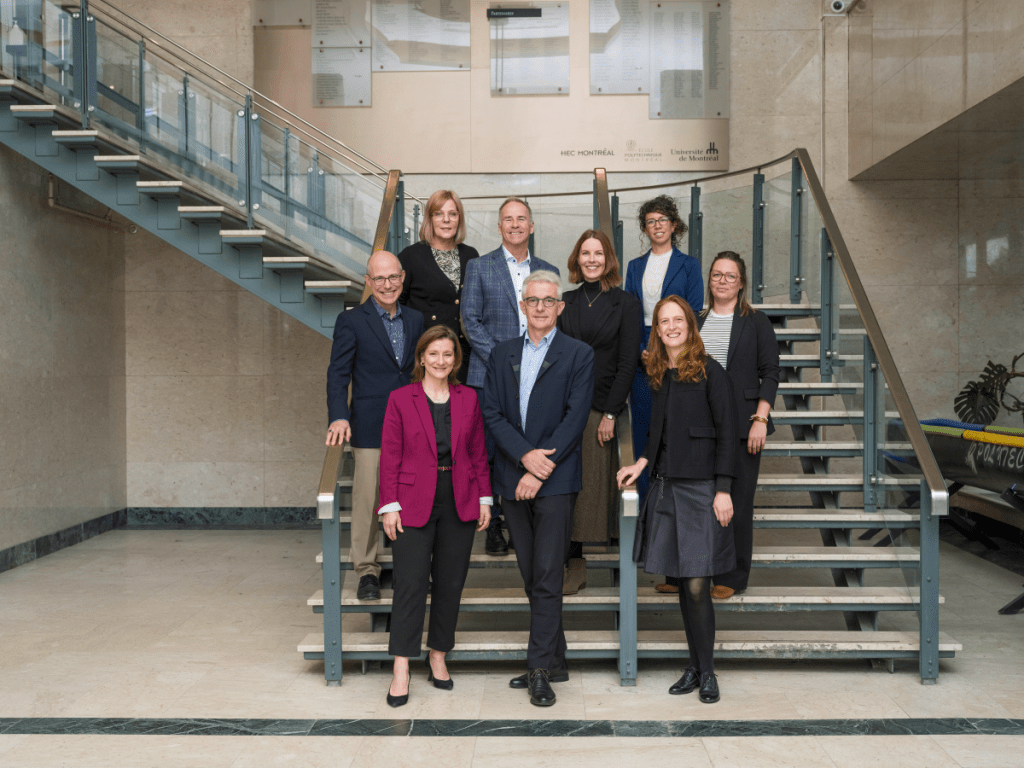
Polytechnique Montreal’s and T.I.M.E. Association Members (Photo : Thierry du Bois)
Elevating New Voices on Internationalization Benefits
“This year, the event’s program uniquely highlighted student voices, notably through the panel ‘Perspectives from Engineers of Tomorrow’ and the active participation of representatives from the Polytechnique Student Association (AEP) and the Graduate Students’ Association (AECSP) in several activities, including the forum focused on the impact of international mobility on engineering students,” noted Julie Defretin, Strategic Advisor for Europe and T.I.M.E. Coordinator at Polytechnique Montréal International.
Bérénice Dubois, a master’s student in computer engineering; Anouar Boumeftah, a recent graduate in electrical engineering; and Sébastien Hally, an industrial engineering graduate (2019) and current McKinsey & Company associate in Kenya, shared their perspectives and experiences with international mobility during the forum. “It’s vital to listen to what students and graduates have to say because many of our international partnerships are designed with them in mind. Society evolves, as do the needs and realities of our student community,” added Julie Defretin.


From left to right: Bérénice Dubois, Sébastien Hally (on screen), Anouar Boumeftah and Christian Merciari, advisor to the Communications and Public Relations Department of Polytechnique Montréal and moderator of the discussion. (Photo: Thierry du Bois)
“In addition to student voices, incorporating research-backed evidence on the benefits of internationalization and perspectives from industry was crucial. This comprehensive approach helps us better understand why we pursue internationalization,” said Guylaine Larocque, Strategic Advisor for France and Francophone Belgium at Polytechnique Montréal International.

Professor Olivier Bégin-Caouette. (Photo : Thierry du Bois)
Olivier Bégin-Caouette, Associate Professor in Comparative Higher Education at the Faculty of Education Sciences, Université de Montréal, presented on higher education internationalization, sharing lessons from the past and potential future directions.
L’Oréal also met with network members as a partner of the new International Specialization Program in Industrial and Systems Engineering (ISIE), a collaboration managed by four T.I.M.E. member institutions and led by Polytechnique Montréal.

From left to right: Maud Cohen, general director of Polytechnique Montréal; Didier Clouteau, president of the T.I.M.E. network; An Verhulst-Santos, President and CEO of L’Oréal Canada. (Photo: Thierry du Bois)
Showcasing International Collaborations
Since 1989, the T.I.M.E. network has connected top engineering universities and schools worldwide, focusing on training global engineers. It comprises 56 members from 24 countries, including Australia, Argentina, Brazil, Canada, and Japan, as well as leading European countries. The network is renowned for its international collaborations in research, education, and industry relations. A key part of T.I.M.E.’s mission is advancing double-degree programs to cultivate globally-minded engineers.
Polytechnique Montréal maintains 190 active collaboration agreements with higher education institutions in 52 countries, spanning regular exchange programs and strategic partnerships such as double degrees and specialization years. This includes 37 active collaborations among the 56 T.I.M.E. members.
Existing double-degree pathways with over 15 T.I.M.E. members include institutions such as CentraleSupélec, ENSTA Paris, ISAE-SUPAERO, École Nationale des Ponts et Chaussées, Groupe des Écoles Centrales, and École des Mines de Saint-Étienne in France; Université Libre de Bruxelles, Université Catholique de Louvain, Université de Liège, and Université de Mons in Belgium; and Politecnico di Milano in Italy. Two new double-degree agreements were signed at Polytechnique with Universidad Politécnica de Madrid and Universitat Politècnica de València in Spain.
Internationalization is central to Polytechnique Montréal’s mission. One of the four pillars of the 2024-2028 strategic plan focuses on enhancing the university’s social and environmental impact, notably by maximizing international partnerships. Strengthening bonds, creating robust relationships, and supporting international collaborations among T.I.M.E. members, led by dedicated professors, students, and professionals, were key goals of this event.
Spotlight on Exchange and Internship Opportunities
Finally, on October 21, the second International Exchange and Internship Fair took place. The inaugural 2023 edition brought together over 60 international exchange students representing 34 of Polytechnique’s 190 partner institutions and student ambassadors from the Polytechnique community.
The second edition was unique, with T.I.M.E. network members who extended their stay to participate. Over 30 representatives from universities across 14 countries hosted booths, engaging with a large number of Polytechnique students. Attendance doubled compared to the previous year, indicating a promising increase in outbound mobility for the years ahead.


The participants who took part in the T.I.M.E. network assembly. at Polytechnique Montréal (Photo: Thierry du Bois)

