

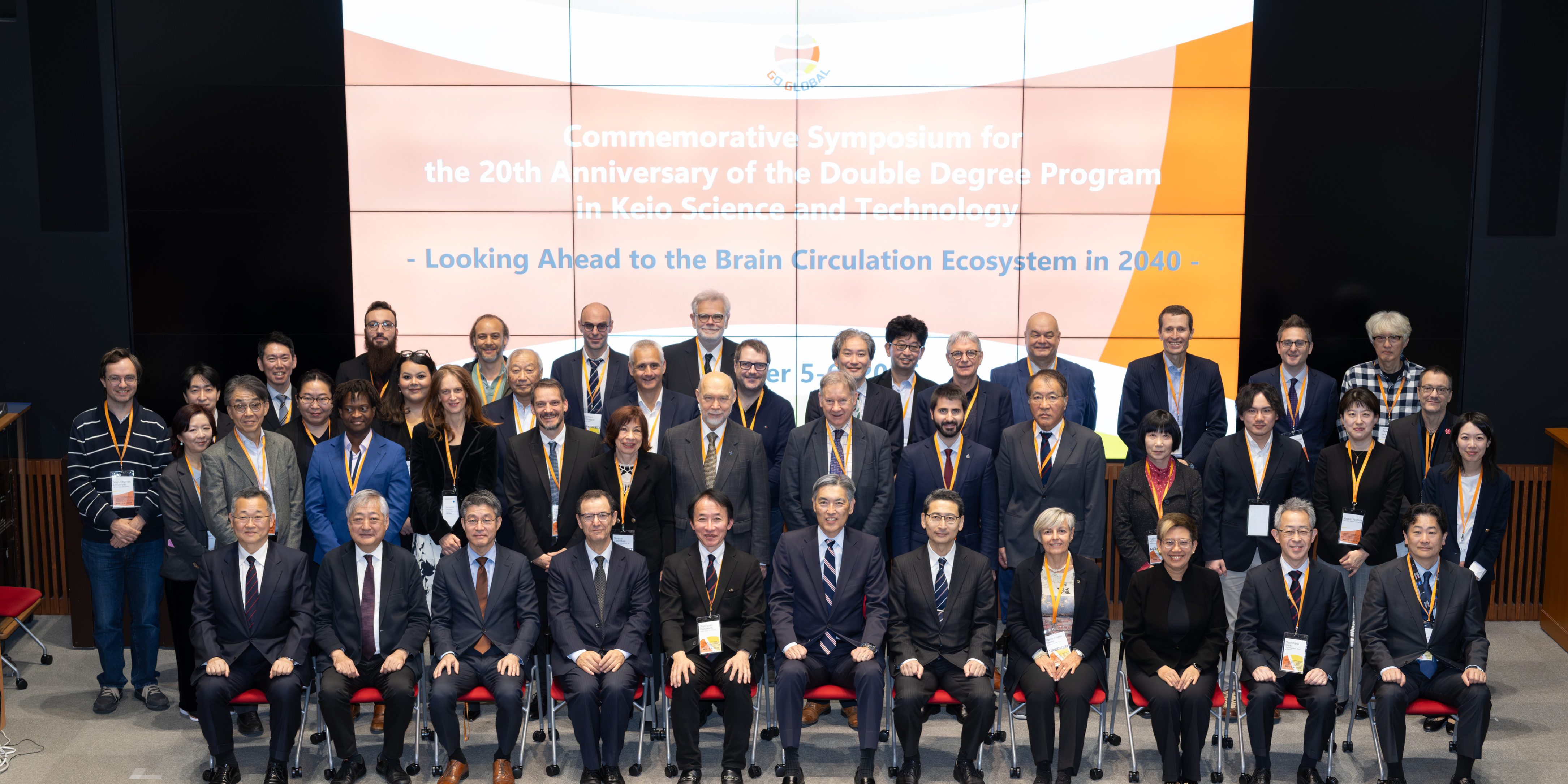
Japan, November 2025 – T.I.M.E. Association conducted a mission to Japan that combined preparations for the 2026 T.I.M.E. General Assembly (GA) and participation in the 20th Anniversary Symposium of Keio University’s Double Degree Programme.
T.I.M.E. General Assembly 2026 to be Hosted by Doshisha University (Kyoto)
Discussions held at Doshisha University confirmed the key organisational elements for the 2026 T.I.M.E. GA, which will take place from 30 September to 3 October 2026 in Kyoto. A preliminary programme has been drafted and will be further reviewed in December 2026.

The 2026 edition will also feature a dedicated T.I.M.E. Double Degree Day on 5 October 2026, hosted by Keio University in Yokohama, reflecting the strategic role of double degrees within T.I.M.E.’s internationalisation agenda.

Recommendations highlighted during the mission include:
- surveying member institutions in advance to prioritise programme content,
- anticipating logistical constraints and preparing contingency plans,
- launching an early “call for contributions” to encourage institutional engagement,
- and considering dedicated GA co-funding mechanisms, as T.I.M.E. now gathers 60 member universities.
Keio University Marks 20 Years of Double Degrees
From 4 to 7 November 2025, T.I.M.E. Association participated in Keio University’s Symposium celebrating the 20th anniversary of its Double Degree (DD) programme. The event brought together around one hundred participants, including alumni, university staff, and representatives from academic and governmental bodies, supported by the Ministry of Education (MEXT) through the Inter-University Exchange Project.

Keio’s Double Degree initiative, launched in 2005 with the École Centrale network, now extends to 17 partner universities, mainly in Europe, including institutions in Belgium, France, Germany, Italy, Spain, and Sweden. Keio joined T.I.M.E. Association in 2007.
Insights on Internationalisation at Keio’s Graduate School of Science and Technology
Keio University’s Graduate School of Science and Technology has played a central role in the university’s internationalisation strategy through English-taught programmes and extensive double-degree partnerships. However, the mission report identifies several structural factors limiting Japanese student participation in long-term mobility or double-degree pathways, including:
- the job-hunting calendar (shūshoku katsudō),
- language barriers,
- modest domestic recognition of international degrees,
- sociocultural dynamics,
- and the perceived length of two-year programmes.
Testimonies from Double Degree alumni highlighted strong learning gains in intercultural leadership, accelerated professional development, and long-lasting international networks.
International Partners confirm the strategic value of Double Degrees
Representatives from Instituto Superior Técnico (Lisbon), Warsaw University of Technology, INSA Lyon, IMT Mines Albi and others confirmed that double degrees remain a powerful tool for:
- acquiring dual academic cultures,
- developing unique competencies,
- building international careers,
- and structuring long-term institutional cooperation.
Key challenges were also identified, including extended study periods, credit recognition across two institutions, and the need to engage students earlier, ideally at bachelor level. An International Study Fair hosted on Keio’s Yagami Campus further illustrated student interest, with participation from multiple T.I.M.E. members.