

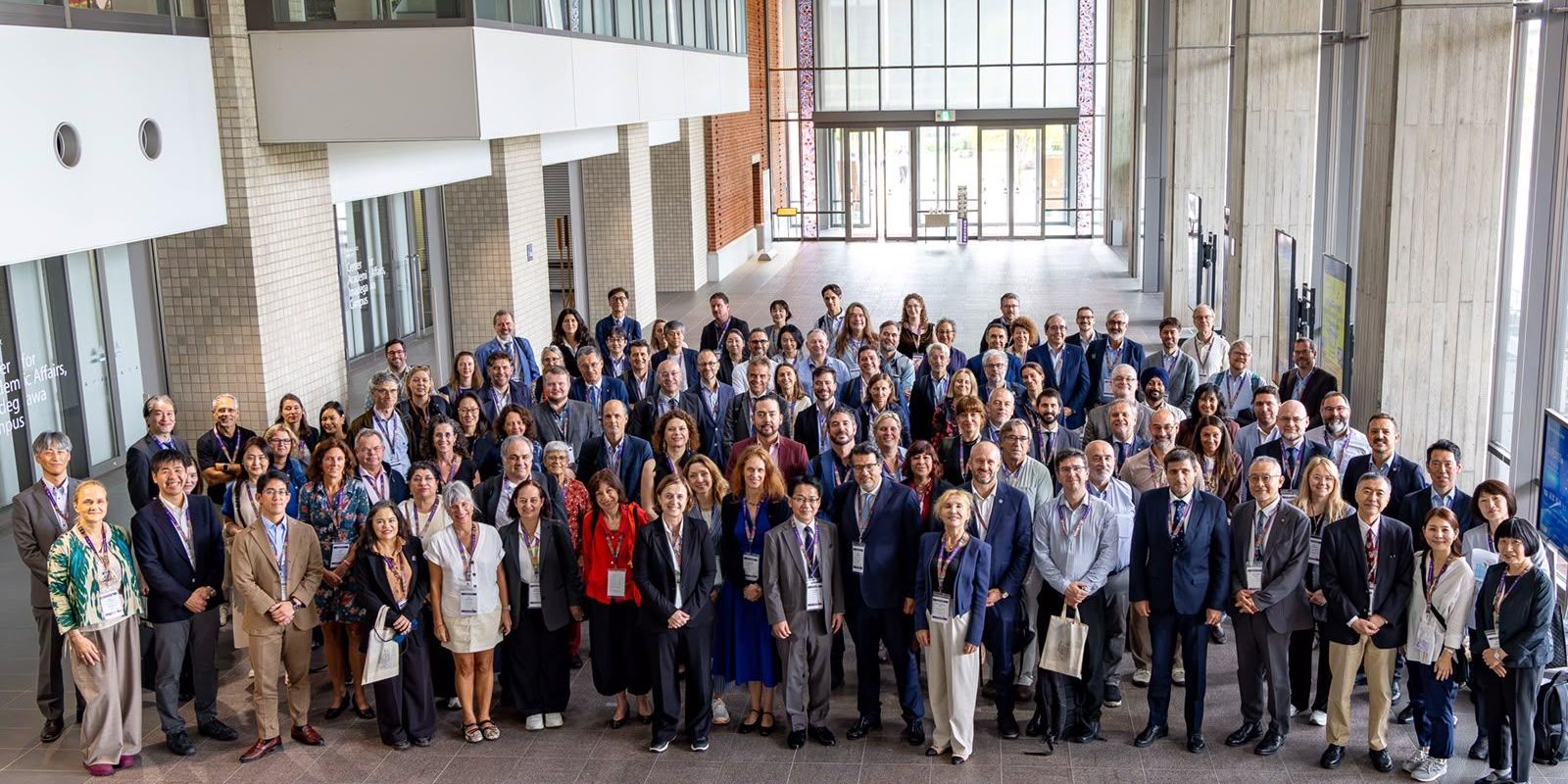
From 30 September to 3 October 2026, Doshisha University in Kyoto, Japan, welcomed the T.I.M.E. community for four days of discussions, workshops and exchanges under the theme “Embracing Diversity.”

With 50 member institutions represented, the gathering brought together colleagues from across the network to reflect on international engineering education, share experiences and explore new opportunities for cooperation.
The event opened with welcoming remarks from Prof. Katsuhiro Kohara, President of Doshisha University, and Prof. Zita Martins, President of the T.I.M.E. Association. Presentations by Doshisha University introduced participants to the institution and the Japanese higher education context, setting the scene for the days ahead.

Supporting the well-being of international students
Studying abroad can be an enriching experience, but adapting to a new academic environment, culture and way of life also comes with challenges. How can universities better support students throughout this transition?
This question was at the centre of a panel discussion on the mental health of international students, bringing together perspectives from five T.I.M.E. member institutions.

The discussion featured Prof. Kenjiro Takemura (Keio University, Japan), Prof. Mami Matsukawa (Doshisha University, Japan), Morten Overgaard (Technical University of Denmark, Denmark), Prof. Monica Riva (Politecnico di Milano, Italy) and Francis Brown-Mastropaolo (Polytechnique Montréal, Canada).
The session provided an opportunity to consider student well-being as an important part of international mobility, alongside the academic and administrative aspects of exchange programmes.
Double degrees: Looking ahead and listening to students
The General Assembly, held on 1 October, was an opportunity to review the Association’s activities and discuss priorities for the coming year.
Double degree programmes remained at the heart of the discussions. The latest figures show that 924 students participated in double degree mobility programmes during the 2025–2026 academic year, reflecting the continued activity of partnerships across the network.
The Double Degree Working Group presented its ongoing reflections on the evolution of the T.I.M.E. double degree model. Discussions focused on how the model could better recognise the skills and competencies students develop through their international academic experience, while taking into account differences between higher education systems.
Cooperation with industry was another important topic, with the presentation of the Corporate Engagement Plan, aimed at developing closer links between universities and companies through initiatives related to global talent, innovation and entrepreneurship.
The General Assembly also approved the Work Plan and Budget for 2026–2027, setting priorities for the Association’s activities over the coming year.
Later that day, students themselves took the floor.
A roundtable brought together four double degree students who shared their experiences of studying at two universities, discussing both the benefits of their programmes and the challenges they had encountered.

The panel featured Apolline Wuhrlin-Damgé (École Centrale de Lille / Doshisha University), Shoji Oikawa (Doshisha University / Politecnico di Milano), Justin Prieur (Centrale Méditerranée / Doshisha University) and Sena Fukabe (Doshisha University / Centrale Nantes).
The discussion was moderated by Naotaka Koide, a double degree alumnus of Doshisha University and École Centrale de Lille.
Their experiences brought a student perspective to the conversations taking place throughout the General Assembly, highlighting both the opportunities that double degrees offer and the practical challenges students face along the way.
[Insert photo: Double Degree Student Roundtable]
Sharing experiences and exploring new approaches
On 2 October, participants took part in a series of seven workshops covering a range of topics relevant to the T.I.M.E. network.
Sessions explored sustainability education and generative AI, doctoral micro-credentials, joint and double degrees, new models of international degrees, engineering without borders and student mobility, and good teaching practices.


Cooperation with industry was also addressed through a workshop involving L’Oréal and ISIE, connecting the broader discussions on corporate engagement with ongoing initiatives involving member institutions and companies.

The workshops gave participants space to share projects, discuss different approaches and identify possible areas for future collaboration.
Beyond the meeting rooms: Discovering Doshisha and Kyoto
The programme also offered opportunities to discover the host university and its surroundings.
At Doshisha University’s Kyotanabe Campus, laboratory tours introduced participants to research activities in fields including electrical and mechanical engineering, chemistry, life and medical sciences, information science and environmental sciences.
Doshisha also organised several cultural activities, including a Japanese language and cultural session, a traditional tea ceremony and matcha tasting, and visits to Kyoto’s historic sites.


These moments offered a different setting for conversations between colleagues and provided an opportunity to experience some of Kyoto’s cultural heritage.
The gathering concluded with an excursion around Kyoto on 3 October.
Looking ahead
The 2026 gathering brought together different perspectives on international engineering education: those of university representatives working to develop academic partnerships, colleagues exploring new approaches to teaching and mobility, and students sharing what double degree programmes mean in practice.
The discussions will continue through the Association’s working groups, committees and collaborations between member institutions.
The next T.I.M.E. General Assembly will be hosted by Universidad Politécnica de Madrid in 2027.

The T.I.M.E. Association warmly thanks Doshisha University and its organising team for welcoming the network to Kyoto, as well as all speakers, students, alumni and members who contributed to the programme.